


A cap that covers a damaged, weakened, or misshapen tooth to restore strength, function, and appearance. Materials include porcelain-fused-to-metal, all-ceramic (zirconia, e.max), and gold.
Dental Crowns
in Turkey
Tooth damage can gradually affect confidence, appearance, and self-image over time. Dental crowns have become one of the most popular solutions for patients seeking natural-looking and long-lasting results with restored structural integrity.
Turkey is recognized worldwide for advanced dental procedures, experienced specialists, and modern medical facilities. CareBridge US helps international patients access trusted providers while guiding them through every step of the journey from consultation to recovery.
Dental crown placement is commonly recommended for patients seeking to protect weakened teeth and rebuild functional chewing surfaces. The procedure involves reshaping the natural tooth and covering it completely with a custom-fitted crown made from durable materials such as zirconia or E-max.
What a dental crown actually does
A crown is not an upgrade. It’s reinforcement.
Dentists use it when the natural tooth is still present but too weak to function safely on its own. The idea is to preserve the root and rebuild everything above it.
Most crowns are placed after root canal treatment. Once the nerve is removed, the tooth loses hydration and becomes more fragile. Without protection, it can crack under normal chewing forces.
In other cases, crowns are used when decay or fractures remove too much structure for a filling to hold.
Typical reasons for a crown:
- tooth cracked or structurally weakened
- large cavity that cannot support a filling
- tooth after root canal treatment
- part of a bridge structure
- visible tooth used for implant restoration
- severe shape or color issues affecting function or aesthetics
The logic is always the same: save the root, rebuild the surface.
Materials used in Turkey
The material changes how the crown behaves, how long it lasts, and how it looks in the mouth.
In Turkey, clinics use the same global materials used in Europe or the US. The difference is mainly in cost structure and lab pricing, not quality.
Zirconia is the most commonly used material today. It is strong enough for back teeth, where chewing force is high, and it doesn’t contain metal. It also integrates well with gum tissue.
E-max is used more in front teeth. It is slightly less strong but has better light transmission, which makes it look closer to natural enamel.
Older porcelain-fused-to-metal crowns still exist, but they are used less often now. The issue is not function, but long-term aesthetics around the gum line.
In practice, material choice is not random. It depends on where the tooth is and how much pressure it carries.
Who actually needs a crown
A crown is not for every damaged tooth. It only works when enough natural structure remains underneath.
If the tooth is too far gone, it cannot hold a crown and usually needs extraction instead.
Dentists usually check three things before deciding:
- how much tooth structure is left above the gum
- whether the root is stable
- whether the surrounding gum and bone are healthy
If these three points are stable, the tooth can usually be saved.
If not, a crown is not a solution anymore; it becomes a risk.
How the dental crowns works in Turkey
Dental Treatments
Get In Touch With Us
Call Us Anytime
+1 929 7101 505
+90 537 462 26 09
+90 537 462 26 09
Email Us
contact@carebridgeus.com
Book A Free Consultation
Request your free consultation with CareBridge US by filling out the form below. Our team will contact you to discuss your treatment goals and guide you through your medical journey in Turkey.
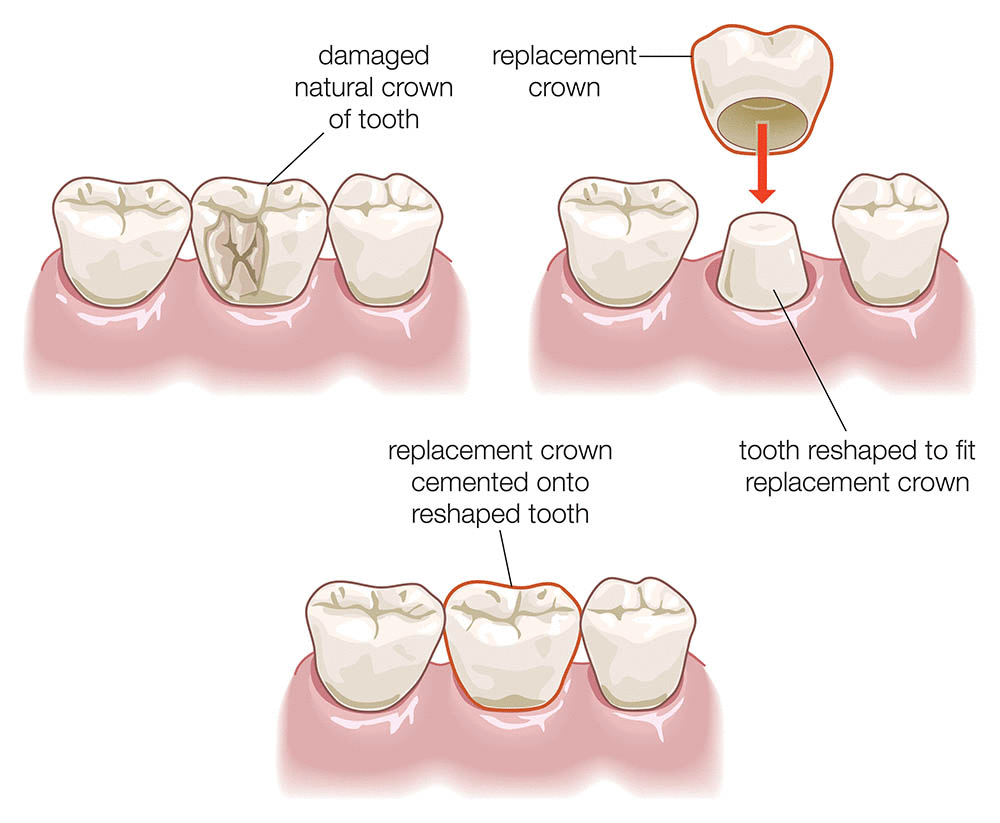 The process is simple in concept, but precise in execution.
First, the tooth is examined, and X-rays are taken. This is not just to look at the visible damage but to check the root and surrounding bone.
Once the decision is made, the tooth is reshaped. A thin layer of enamel is removed so the crown can fit over it properly. This step is irreversible but necessary for stability.
After shaping, an impression is taken. Many clinics now use digital scanners instead of physical molds. The data is sent to a lab where the crown is designed and manufactured.
While the final crown is being made, a temporary crown is placed. It protects the tooth and allows normal function.
A few days later, the final crown is tested and adjusted. Bite alignment matters here. Even small pressure differences can affect comfort long-term.
Once everything fits correctly, the crown is permanently cemented. The entire process is usually completed within a week.
What recovery actually feels like
Recovery is not dramatic, but it is noticeable.
The tooth and surrounding gum can feel sensitive for a few days. This is mostly due to reshaping and adjustment, not damage.
Cold sensitivity is common in the early phase, especially if the tooth was deeply prepared or previously treated with a root canal. In most cases, it settles on its own.
Eating returns to normal quickly, but the first 24 hours are usually kept light to allow the cement to stabilize properly.
The bite may feel slightly “different” at first. This is normal. The mouth adapts to pressure changes within days.
If discomfort continues beyond a few weeks, the bite usually needs a small adjustment.
Risks and limitations
A dental crown is reliable, but it is not permanent in the sense of being indestructible.
The biggest limitation is structural: the natural tooth is permanently modified. Once enamel is removed, it does not grow back.
Other issues can appear over time:
- sensitivity in early weeks
- gum irritation after placement
- crown chipping under heavy pressure
- loosening if cement bond weakens
- decay forming at the edge if hygiene is poor
People who grind their teeth put more mechanical stress on crowns. In those cases, a night guard is often recommended to reduce wear.
Crowns don’t eliminate future dental problems. They only protect what is already there.
Why Turkey is a common destination
Turkey has become a major hub for dental crowns for two main reasons: cost and speed.
The materials are the same as in Western countries, but operational costs are lower. That directly affects pricing.
A zirconia crown in Turkey can cost a fraction of what it costs in the UK or US, even though the material and technology are equivalent.
Another factor is workflow. Many clinics have in-house labs or fast-turnaround partner labs, which reduces waiting time between steps.
Instead of multiple weeks of appointments, most treatments are completed in a short trip.
Patients usually choose Turkey because:
- treatment cost is significantly lower
- materials are internationally certified
- digital scanning and CAD/CAM systems are standard
- turnaround time is fast
- logistics are organized for international patients
Preparation before treatment
Preparation is mostly about stability, not complexity.
The mouth needs to be in a calm, clean state before starting. Any inflammation or infection changes how the crown fits and how the gum responds.
Patients are usually advised to have a cleaning before treatment. This reduces inflammation and improves final results.
Medication history is also important, especially blood thinners or drugs affecting healing.
Smoking is a major factor. It affects gum health and long-term stability, not just healing speed.
Medical evaluation
Before anything starts, the tooth is evaluated properly.
Dentists look at:
- remaining tooth structure
- root condition
- gum stability
- bite pressure distribution
X-rays or scans are used to confirm what cannot be seen visually.
At this stage, the decision is simple: can this tooth survive with a crown, or does it need another solution.
There is no in-between. Either the structure is stable enough or it isn’t.
Before & After
Results
See how dental crowns can help restore tooth shape, strength, and appearance through carefully planned restoration coordination. Each result depends on the patient’s tooth condition, material selection, bite alignment, preparation quality, and individual adaptation process.
![CareBridge - Cosmetic Dentistry - Before and after [07]](https://carebridgeus.com/wp-content/uploads/2026/05/CareBridge-Cosmetic-Dentistry-Before-and-after-07.jpg "CareBridge - Cosmetic Dentistry - Before and after [07]")
![CareBridge - Cosmetic Dentistry - Before and after [06]](https://carebridgeus.com/wp-content/uploads/2026/05/CareBridge-Cosmetic-Dentistry-Before-and-after-06.jpg "CareBridge - Cosmetic Dentistry - Before and after [06]")
![CareBridge - Cosmetic Dentistry - Before and after [05]](https://carebridgeus.com/wp-content/uploads/2026/05/CareBridge-Cosmetic-Dentistry-Before-and-after-05.jpg "CareBridge - Cosmetic Dentistry - Before and after [05]")
![CareBridge - Cosmetic Dentistry - Before and after [04]](https://carebridgeus.com/wp-content/uploads/2026/05/CareBridge-Cosmetic-Dentistry-Before-and-after-04.jpg "CareBridge - Cosmetic Dentistry - Before and after [04]")
![CareBridge - Cosmetic Dentistry - Before and after [03]](https://carebridgeus.com/wp-content/uploads/2026/05/CareBridge-Cosmetic-Dentistry-Before-and-after-03.jpg "CareBridge - Cosmetic Dentistry - Before and after [03]")
![CareBridge - Cosmetic Dentistry - Before and after [02]](https://carebridgeus.com/wp-content/uploads/2026/05/CareBridge-Cosmetic-Dentistry-Before-and-after-02.jpg "CareBridge - Cosmetic Dentistry - Before and after [02]")
![CareBridge - Cosmetic Dentistry - Before and after [01]](https://carebridgeus.com/wp-content/uploads/2026/05/CareBridge-Cosmetic-Dentistry-Before-and-after-01.jpg "CareBridge - Cosmetic Dentistry - Before and after [01]")
What is a dental crown?
When do I need a crown instead of a filling?
When tooth structure loss is too extensive for a filling to support biting forces, after root canal treatment, for cracked teeth, or for significant cosmetic improvement.
How many appointments are needed?
Traditional crowns: 2 appointments (preparation + temporary crown, then permanent placement 1–2 weeks later). Same-day CEREC crowns: single appointment using CAD/CAM technology.
How long do crowns last?
10–15 years on average, with many lasting 20+ years. Longevity depends on material, oral hygiene, grinding habits, and regular dental check-ups.
Will my crown look natural?
All-ceramic crowns (zirconia, e.max) closely mimic natural tooth translucency and color. Your dentist matches shade to surrounding teeth for seamless appearance.
Get Your
Free Consultation
Speak With
A Medical
Consultant
Fill out the form and our team will contact you with personalized guidance and treatment information.
Copyright 2026 by Carebridge US. All rights reserved.
Copyright 2026 by Carebridge US. All rights reserved.