


Sapphire blades (made from synthetic sapphire crystal) create smaller, more precise incisions than steel blades. This reduces tissue trauma, enables denser packing, and may promote faster healing with less scarring.
FUE Sapphire Hair Transplant
in Turkey
Hair loss rarely appears suddenly; it develops in stages, becoming more visible as density declines and the hairline changes. FUE Sapphire hair transplant has emerged as a refined option for patients seeking enhanced precision, faster healing, and improved density results. Turkey is recognized worldwide for advanced hair transplant procedures, experienced specialists, and modern medical facilities.
CareBridge US helps international patients access trusted providers while guiding them through every step of the journey from consultation to recovery. FUE Sapphire is commonly recommended for patients who want the benefits of follicular unit extraction with the added accuracy of sapphire-tipped blades. The procedure involves extracting individual follicles and implanting them into channels created with sapphire blades for cleaner incisions and better direction control.
What is FUE Sapphire hair transplant
FUE Sapphire hair transplant is an advanced version of the standard FUE technique. The main difference lies in the use of sapphire-tipped blades instead of traditional steel instruments for creating recipient channels.
These sapphire blades allow more precise and controlled incisions. The channels are smaller, smoother, and more consistent in shape compared to steel.
This leads to several functional improvements:
- grafts are placed into cleaner and more precise channels.
- surrounding tissue experiences less trauma during incision creation.
- healing tends to be faster and more predictable.
- higher density can be achieved within the same area.
- hair direction can be controlled with greater accuracy.
The donor area still defines the final result. Sapphire improves placement quality, not graft supply.
Who is a good candidate for FUE Sapphire hair transplant
Suitability depends on biological conditions rather than preference or urgency.
Hair loss must be stable for at least 12 to 24 months. Active loss makes long-term results less predictable because surrounding hair may continue to thin.
The donor area must contain enough healthy follicles to support extraction. The back and sides of the scalp determine how much coverage is possible.
Scalp health also plays a critical role. Conditions such as inflammation, irritation, or dermatological disorders reduce graft survival and healing quality.
Expectations must remain realistic. A hair transplant procedure improves density and structure but does not restore original juvenile hairlines in advanced cases.
Typical suitable profile includes:
- stable hair loss pattern.
- sufficient donor density.
- healthy scalp condition.
- moderate to advanced thinning.
- realistic expectations about density.
Age is less important than stability. A stable pattern is more relevant than chronological age.
FUE Sapphire hair transplant process in Turkey
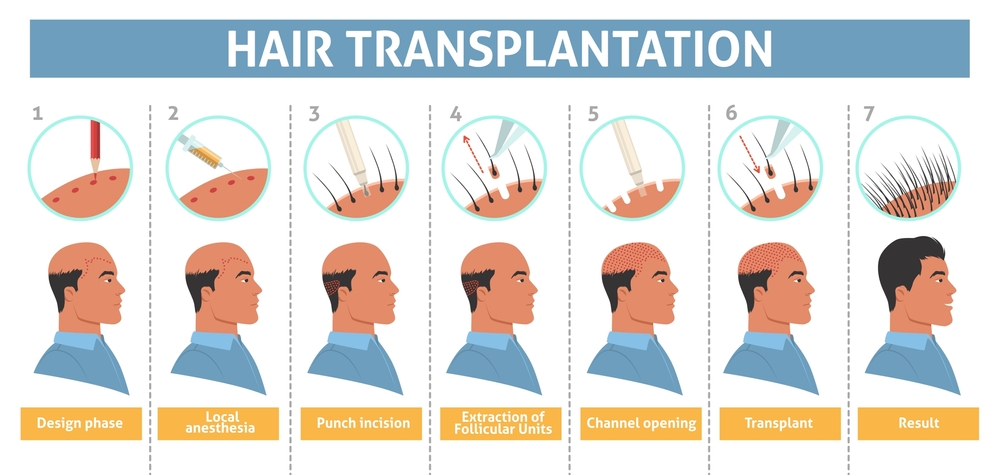
The FUE Sapphire hair transplant process in Turkey is performed in a single session, usually lasting 6 to 8 hours.
The procedure begins with donor area evaluation. Graft availability is measured under magnification to define a realistic outcome range.
Hairline design follows. This step is done while the patient is awake so adjustments can be made before any extraction begins.
Local anesthesia is applied to numb both donor and recipient areas.
Follicles are then extracted one by one using micro-punch tools. These grafts are stored in a special solution to maintain viability.
Sapphire blades are used to create recipient channels. These incisions are smaller and more controlled than traditional steel blade cuts.
Implantation follows immediately after channel creation. Each follicle is placed according to natural hair direction and angle.
Key steps include:
- donor area evaluation and graft estimation.
- hairline design and approval.
- local anesthesia application.
- follicle extraction using micro-punch tools.
- graft preservation in solution.
- sapphire channel creation.
- graft implantation.
- aftercare instructions.
Each step directly affects final density and natural appearance.
Hair Loss Treatments
Get In Touch With Us
Call Us Anytime
+1 929 7101 505
+90 537 462 26 09
+90 537 462 26 09
Email Us
contact@carebridgeus.com
Book A Free Consultation
Request your free consultation with CareBridge US by filling out the form below. Our team will contact you to discuss your treatment goals and guide you through your medical journey in Turkey.
FUE Sapphire hair transplant recovery
Recovery follows a biological cycle rather than immediate visible change.
In the first days, mild redness and small scabs appear in both donor and recipient areas. These usually disappear within 5 to 7 days.
Between week 2 and week 4, transplanted hairs shed. This is expected and part of the normal hair cycle.
New growth begins around month 3 to 4. At this stage, hair appears fine and soft.
By month 6, visible density improvement becomes noticeable.
Final results stabilize between month 9 and 12.
Recovery timeline:
- week 1 to 2: healing phase.
- week 3 to 4: shedding phase.
- month 3 to 4: early regrowth.
- month 6: visible improvement.
- month 9 to 12: final result.
Final outcome depends entirely on donor supply and hair characteristics.
Risks and limitations of FUE Sapphire hair transplant
FUE Sapphire hair transplant is safe when performed under proper medical conditions, but biological limitations still apply.
Temporary effects may include swelling, scalp sensitivity, and shedding of transplanted or native hairs. These resolve naturally over time.
Permanent limitations include:
- donor supply limits maximum achievable density.
- ongoing hair loss may continue in untreated areas.
- hair thickness cannot be changed.
- small white dot scarring remains in donor area.
- early uneven growth may appear before full maturation.
Sapphire improves precision and healing quality but does not change biological capacity.
How to prepare for FUE Sapphire hair transplant
Preparation directly affects graft survival and healing quality.
Smoking and alcohol are usually stopped before the procedure to improve blood circulation.
Any medication affecting blood flow must be reviewed with a doctor.
The scalp is cleaned the day before using a medical shampoo provided by the clinic.
Preparation checklist:
- stop smoking and alcohol.
- review medication with physician.
- clean scalp before procedure.
- avoid pressure or friction on scalp.
- wear loose clothing on procedure day.
The first night after the procedure is important for graft stability.
Medical evaluation for FUE Sapphire hair transplant in Turkey
A medical evaluation for FUE Sapphire hair transplant in Turkey determines eligibility based on objective analysis.
Photographs are used to assess:
- donor density.
- hair loss pattern.
- graft availability.
Based on this, a realistic treatment plan is created. If suitable, expected graft numbers and density range are defined. If not, limitations are clearly explained.
No assumptions are used. Everything is based on measurable scalp conditions.
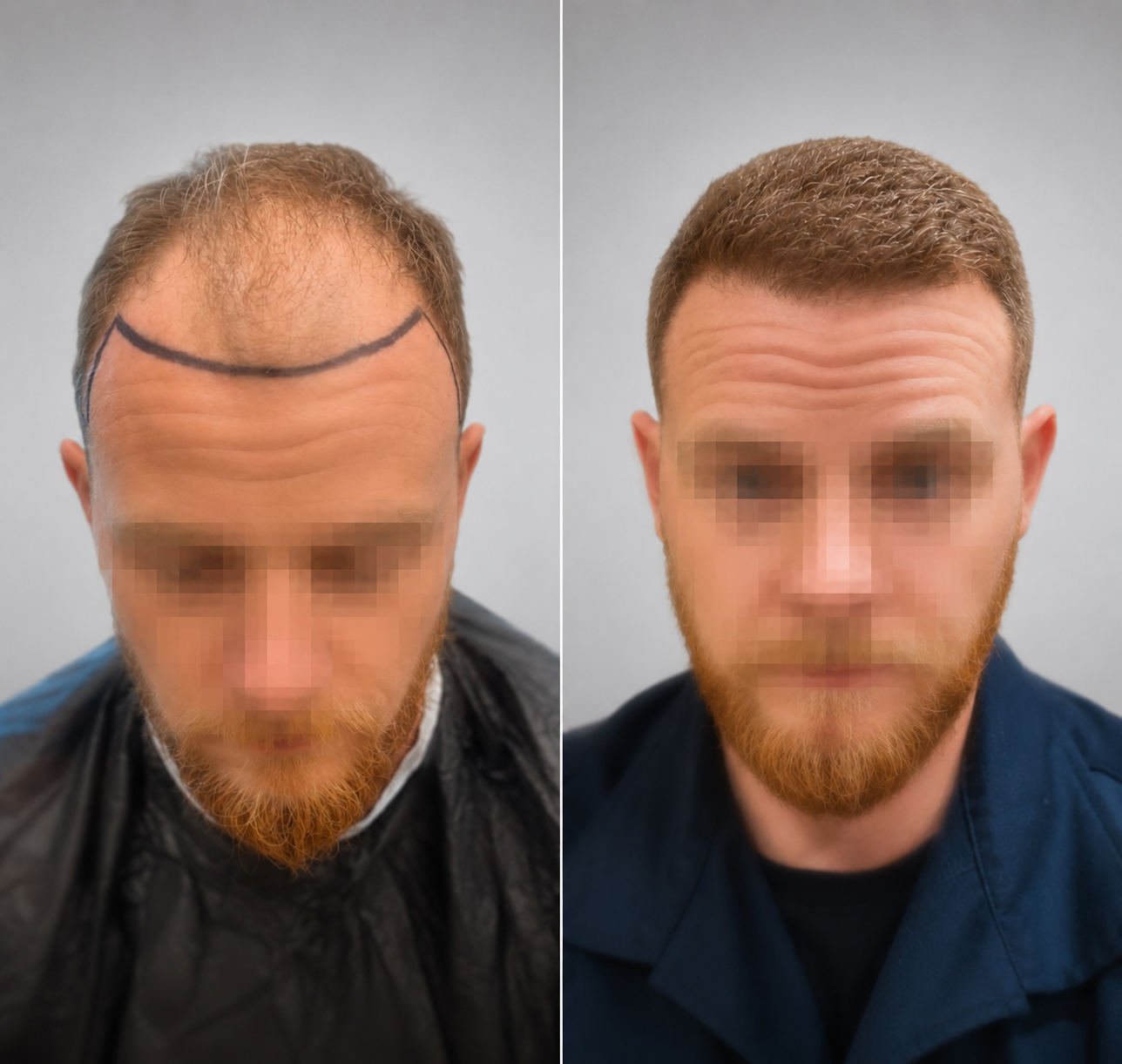
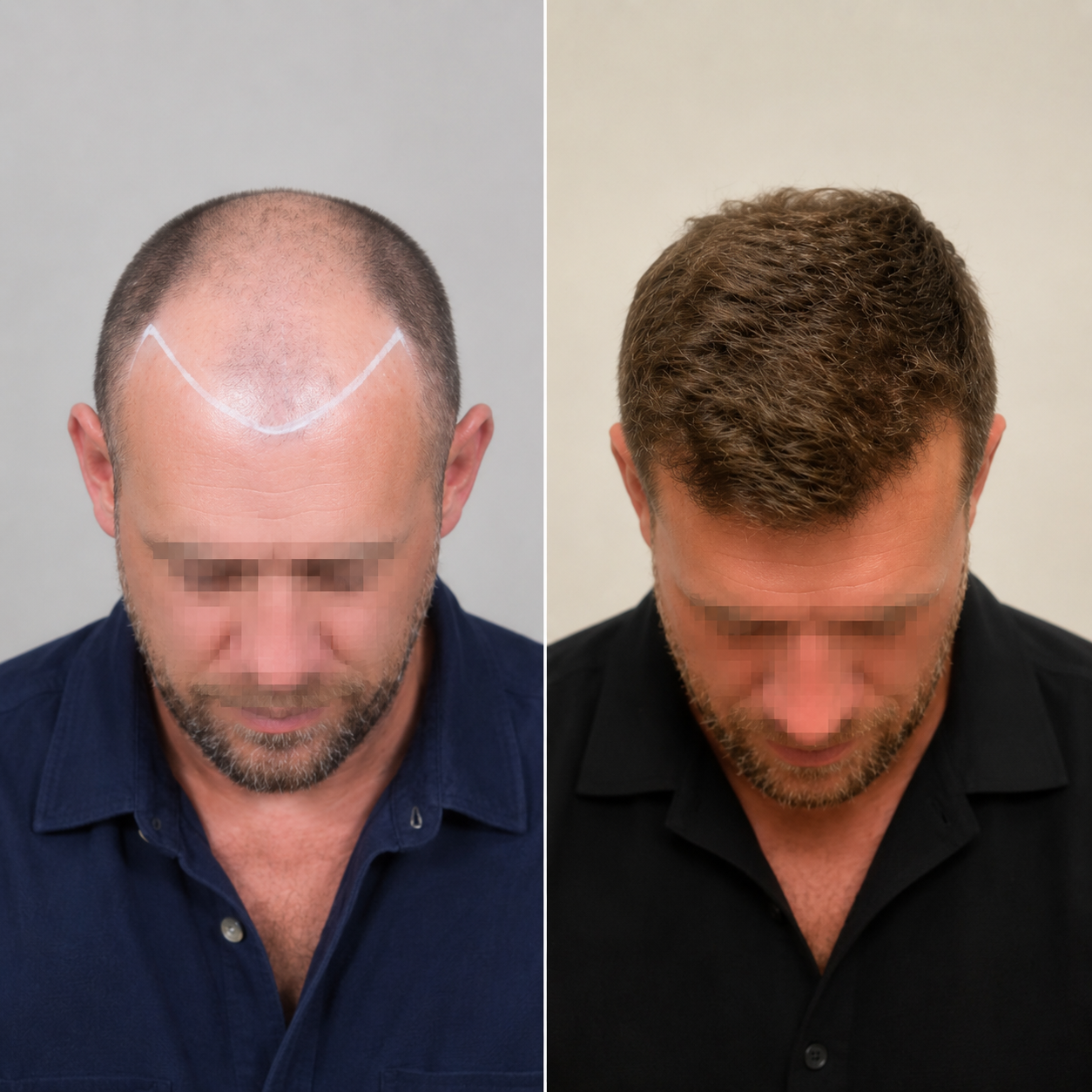
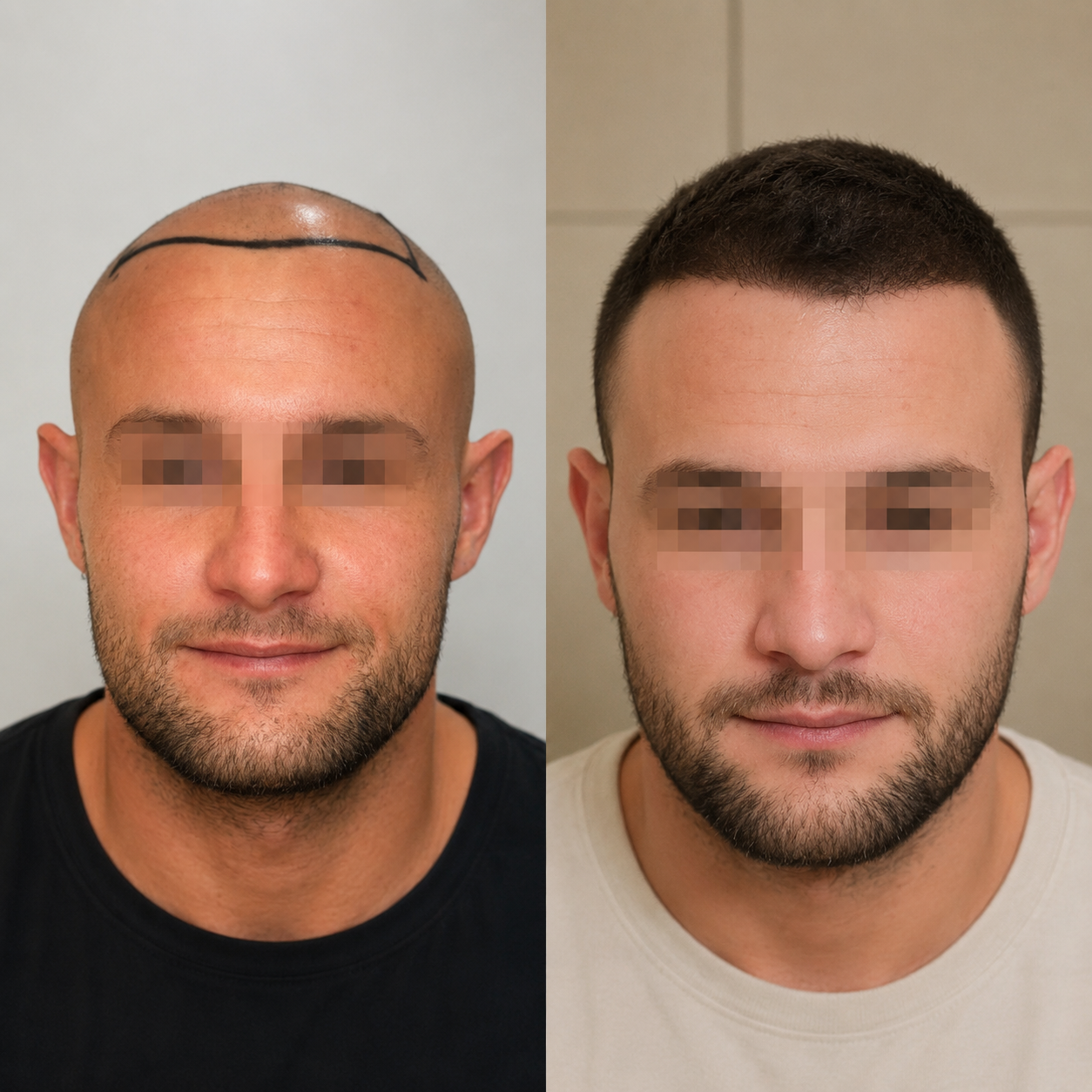
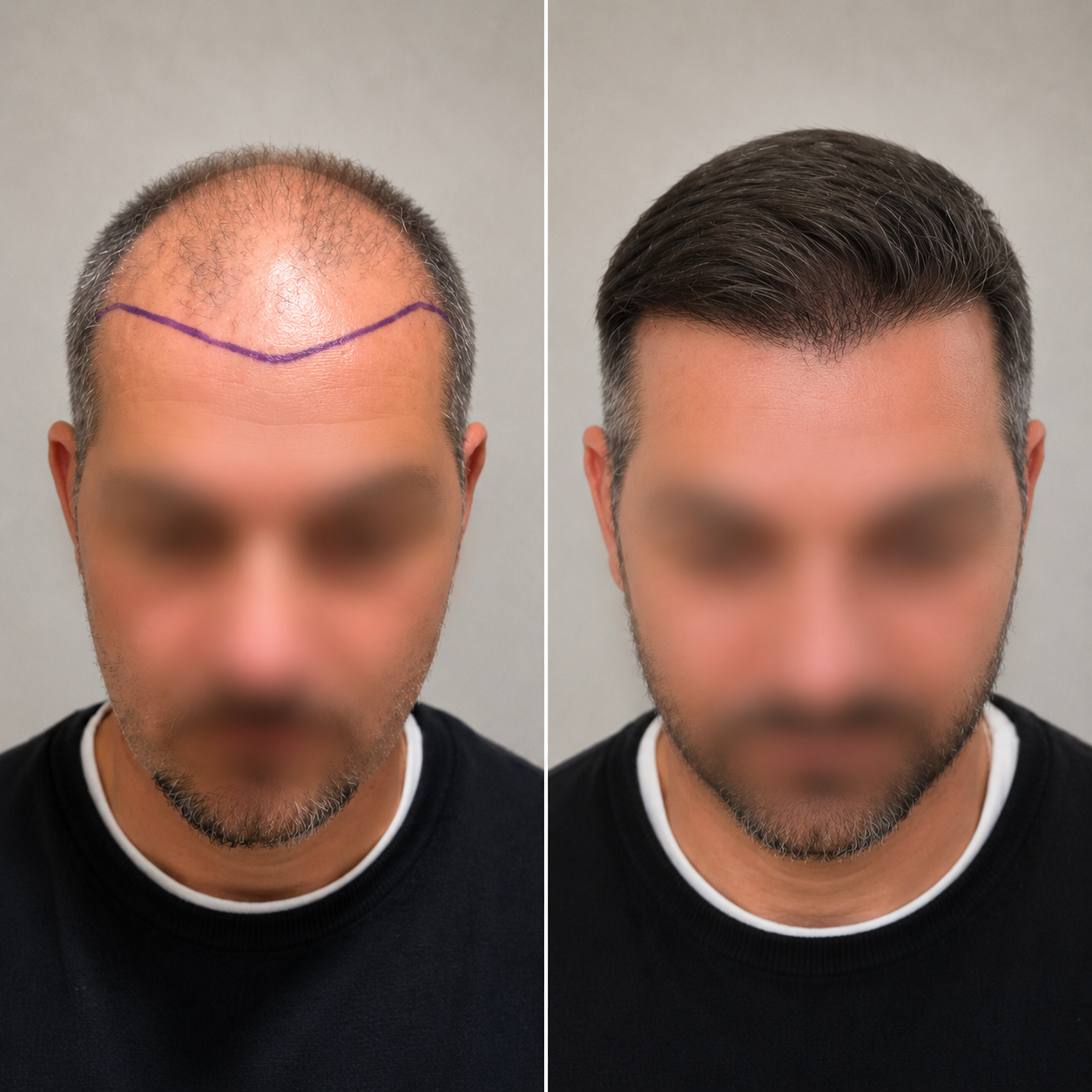
Before & After
Results
See how FUE Sapphire can help restore natural-looking hair density and improve hairline design through carefully planned graft extraction coordination. Each result depends on the patient’s hair loss level, donor area quality, sapphire blade precision, graft planning, and individual healing process.
What makes Sapphire FUE different from standard FUE?
Is Sapphire FUE better for everyone?
It offers advantages for most patients, especially those wanting maximum density or with limited donor supply. Your surgeon assesses whether the additional cost is justified for your specific case.
Does Sapphire FUE hurt less?
The procedure itself is performed under local anesthesia—pain-free. Post-operative discomfort is typically mild for both techniques. Some patients report slightly less swelling with sapphire blades due to smaller incisions.
Are the results more natural?
Natural results depend primarily on surgeon skill in designing hairline angles, direction, and density distribution not the blade alone. Sapphire tools facilitate precision but do not replace artistic expertise.
Get Your
Free Consultation
Speak With
A Medical
Consultant
Fill out the form and our team will contact you with personalized guidance and treatment information.
Copyright 2026 by Carebridge US. All rights reserved.
Copyright 2026 by Carebridge US. All rights reserved.