

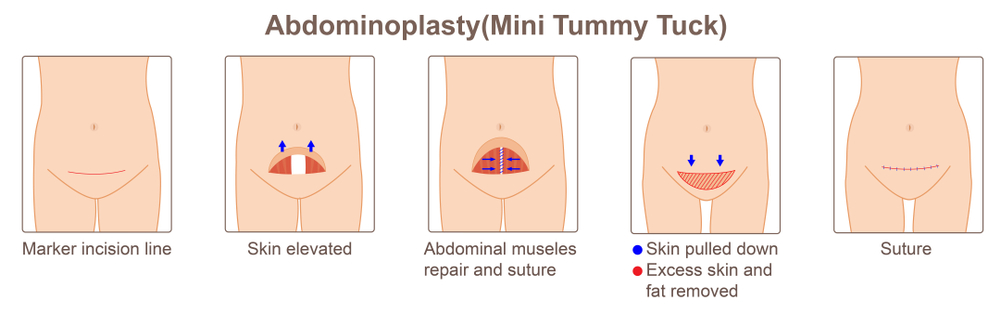
A full tummy tuck addresses the entire abdominal area, tightening muscles above and below the navel and repositioning the belly button. A mini tummy tuck only treats the lower abdomen below the navel with a smaller incision and no navel repositioning. The right option depends on your skin laxity and muscle separation extent.
Tummy Tuck
in Turkey
Excess abdominal skin can gradually affect confidence, appearance, and self-image over time. Tummy tuck procedure has become one of the most popular solutions for patients seeking natural-looking and long-lasting results with a firmer midsection.
Turkey is recognized worldwide for advanced cosmetic procedures, experienced specialists, and modern medical facilities. CareBridge US helps international patients access trusted providers while guiding them through every step of the journey from consultation to recovery.
Tummy tuck (abdominoplasty) is commonly recommended for patients seeking to remove excess skin and repair separated abdominal muscles. The procedure involves making a low horizontal incision, tightening the abdominal wall muscles, removing excess skin, and repositioning the remaining tissue for a smoother, supported contour.
What a tummy tuck does
A tummy tuck works across different anatomical layers. The result comes from combining skin removal with muscle repair.
The skin is assessed first. When elasticity is permanently reduced, excess skin cannot be corrected without removal.
The muscle layer is then addressed. When the abdominal muscles are separated, they are brought back together to restore internal tension and stability.
Fat can be adjusted in selected cases, depending on distribution and surgical access.
Main effects of the procedure:
- removal of excess abdominal skin
- tightening of separated abdominal muscles
- reduction of localized fat (if combined with liposuction)
- repositioning of the navel
Outcome depends on skin quality, muscle condition, and overall body composition.
Types of tummy tuck procedures
The type of abdominoplasty depends on the extent of correction required. It is defined by anatomy, not patient preference.
A mini tummy tuck is limited to the lower abdomen. It is used when excess skin is mild and muscle separation is minimal.
A full tummy tuck treats the entire abdominal wall. It includes muscle repair and repositioning of the navel.
An extended tummy tuck includes the flanks and lateral abdomen. It is usually indicated after significant weight loss.
Procedure types:
- mini tummy tuck (lower abdomen only)
- full tummy tuck (entire abdomen)
- extended tummy tuck (abdomen + flanks)
Each type corresponds to a different anatomical situation.
Who is a good candidate for tummy tuck in Turkey
Suitability is based on physical condition and medical safety rather than appearance alone.
The procedure is generally considered when excess skin is present and does not respond to non-medical approaches. Muscle separation is often part of the indication.
Patients are usually suitable when:
- weight has been stable for at least 6 months
- visible excess or hanging abdominal skin is present
- diastasis recti is present
- BMI is generally below 30
- no uncontrolled medical conditions are present
Smoking is a significant risk factor. It reduces blood flow and affects tissue healing.
Pregnancy is usually avoided after the procedure, as it can reverse muscle repair and stretch the abdominal wall again.
Tummy tuck procedure step by step
The procedure is performed under general anesthesia and typically lasts between two and five hours depending on complexity.
A low horizontal incision is made in the lower abdomen. The position is planned so the scar remains hidden under clothing.
The skin is lifted to expose the abdominal muscles. The muscles are then repaired by suturing them together, restoring internal support.
Excess skin is removed. The remaining skin is repositioned to match the new abdominal contour.
The navel is repositioned to maintain a natural anatomical appearance.
Surgical steps:
- low abdominal incision
- elevation of skin layer
- exposure of abdominal muscles
- muscle repair (diastasis correction)
- removal of excess skin
- repositioning of the navel
- closure and dressing
A compression garment is applied at the end of the procedure.
Plastic Surgery Treatments
Get In Touch With Us
Call Us Anytime
+1 929 7101 505
+90 537 462 26 09
+90 537 462 26 09
Email Us
contact@carebridgeus.com
Book A Free Consultation
Request your free consultation with CareBridge US by filling out the form below. Our team will contact you to discuss your treatment goals and guide you through your medical journey in Turkey.
Tummy tuck recovery timeline
Recovery is gradual and takes several weeks. The body adapts progressively to structural changes.
In the early phase, movement is limited. Patients usually walk slightly bent forward to reduce tension on the abdominal wall.
Swelling and bruising are expected and follow a predictable pattern before slowly decreasing.
Recovery phases:
- week 1: limited mobility, assistance often required
- weeks 2–3: gradual improvement, swelling reduction
- weeks 4–6: return to light activity
- months 3–6: visible contour improvement
- up to 12 months: final stabilization
Compression garments are used during early recovery to support healing and control swelling.
Risks and complications of tummy tuck
A tummy tuck is a major medical procedure. Complications can occur and must be understood before treatment.
Most patients experience temporary effects during healing. These are expected and resolve over time.
Common temporary effects:
- pain and discomfort
- swelling and bruising
- numbness in the lower abdomen
- tightness during movement
More significant complications are less frequent but clinically important:
- seroma (fluid accumulation)
- infection
- hematoma (bleeding under the skin)
- delayed wound healing
- reduced blood supply to tissue
- blood clots (deep vein thrombosis)
Risk increases in smokers, patients with higher BMI, and those with medical conditions affecting healing.
Limitations of tummy tuck
A tummy tuck improves abdominal contour but has permanent biological limitations.
It does not stop natural aging or prevent future body changes.
Key limitations include:
- permanent scar across the lower abdomen
- possible long-term numbness
- results affected by weight gain
- muscle repair can be reversed by pregnancy
- gradual skin changes over time
These outcomes are part of the expected long-term result.
Why tummy tuck is performed in Turkey
Tummy tuck procedures in Turkey follow internationally standardized medical protocols.
The techniques, materials, and clinical steps are consistent with those used in Europe and other regions.
The procedure itself does not differ medically. The main differences relate to organization, access, and treatment structure.
Medical evaluation before tummy tuck
Before any procedure, a structured evaluation is required to determine suitability.
The focus is anatomical and medical rather than visual. The goal is to assess whether the abdominal wall can be safely corrected and whether healing conditions are adequate.
The evaluation includes:
- amount of excess skin
- degree of muscle separation
- fat distribution
- abdominal proportions
- general health status
This stage acts as a clinical filter.
Some cases are delayed or not recommended when:
- weight is unstable
- BMI is elevated
- skin quality is insufficient
- healing conditions are compromised
When conditions are appropriate, the treatment plan is defined directly from anatomical findings.
Before & After
Results
See how abdominoplasty can help restore a firmer, flatter abdominal profile and improve core contour through carefully planned treatment coordination. Each result depends on the patient’s skin laxity, muscle separation extent, amount of excess tissue, and individual healing process.
![CareBridge - Tummy Tuck - Before and after [01]](https://carebridgeus.com/wp-content/uploads/2026/05/CareBridge-Tummy-Tuck-Before-and-after-01.jpg "CareBridge - Tummy Tuck - Before and after [01]")
![CareBridge - Tummy Tuck - Before and after [04]](https://carebridgeus.com/wp-content/uploads/2026/05/CareBridge-Tummy-Tuck-Before-and-after-04.jpg "CareBridge - Tummy Tuck - Before and after [04]")
![CareBridge - Tummy Tuck - Before and after [03]](https://carebridgeus.com/wp-content/uploads/2026/05/CareBridge-Tummy-Tuck-Before-and-after-03.jpg "CareBridge - Tummy Tuck - Before and after [03]")
![CareBridge - Tummy Tuck - Before and after [02]](https://carebridgeus.com/wp-content/uploads/2026/05/CareBridge-Tummy-Tuck-Before-and-after-02.jpg "CareBridge - Tummy Tuck - Before and after [02]")
What is the difference between a full tummy tuck and a mini tummy tuck?
How long do I need to stay in Turkey for a tummy tuck?
Plan for 7–10 days. The procedure requires 1–2 nights in hospital. You need follow-up visits before flying home, and you cannot lift luggage or strain your core during early recovery.
Will I have a scar? Where will it be?
Yes, a permanent scar is unavoidable. It runs horizontally between the hip bones, typically hidden below the bikini line. The scar fades over 12–18 months but never disappears completely. Vertical scars are rare and only used in massive weight loss cases.
Can I combine a tummy tuck with other procedures?
Yes, commonly with liposuction (lipoabdominoplasty), breast surgery, or BBL. However, combining procedures increases operative time and recovery demands. Your surgeon will assess safety limits based on your health and BMI.
When can I return to work and exercise?
Desk work: 2–3 weeks. Physical work: 6–8 weeks. Light walking is encouraged immediately. Core exercises and heavy lifting are restricted for 6–8 weeks to protect muscle repair.
Will a tummy tuck remove stretch marks?
Only stretch marks on the excised skin (typically below the navel) are removed. Those above the navel may be repositioned lower but remain visible.
Is the result permanent?
The removed skin and fat do not return. However, significant weight gain or pregnancy can stretch remaining tissues and compromise results. Maintaining stable weight is essential.

What are the main risks?
Seroma (fluid accumulation), infection, wound separation, blood clots, and poor scarring. Smokers face significantly higher complication rates. The risk of serious complications is under 5% in healthy, non-smoking patients.
Get Your
Free Consultation
Speak With
A Medical
Consultant
Fill out the form and our team will contact you with personalized guidance and treatment information.
Copyright 2026 by Carebridge US. All rights reserved.
Copyright 2026 by Carebridge US. All rights reserved.